
03-10-2026
By Angela Bennett MSc, FCA, CEO of Diamond Systems, Belfast
Martyn’s Law is prompting premises owners and managers across Northern Ireland to examine their responsibilities for protecting people from terrorism. But establishing whether your premises are within scope should not be the end of the conversation.
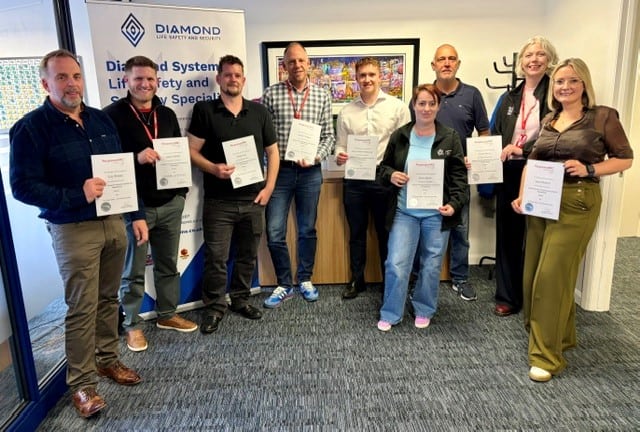
That was brought home to me when Diamond Systems hosted Northern Ireland’s first five-day Level 3 course in Counter-Terrorism Protective Security and Preparedness, delivered by PerpetuityARC Training.
“For the next five days, I want you to think like a terrorist.”
That was the opening instruction from Kevin Jewell, our exceptional course instructor.
I expected to deepen my understanding of Martyn’s Law. I left thinking very differently about what it means to keep people safe.
Martyn’s Law is the commonly used name for the Terrorism (Protection of Premises) Act 2025. Named in memory of Martyn Hett, one of the 22 people killed in the Manchester Arena attack, it will require those responsible for certain premises and events to take proportionate steps to protect people from terrorism.
Understanding the scope of Martyn’s Law, the applicable requirements and who holds responsibility is important. So is understanding how your organisation would respond if an attack happened.
I’ve been closely following the development of Martyn’s Law for around 18 months. My expectation for the course was to leave with a more in-depth understanding of the Act’s scope, its different tiers, excluded premises and public protection procedures.
But here’s the stark reality: terrorists don’t follow flow charts.
Terrorists don’t care whether your premises are in scope or out of scope for Martyn’s Law. They are not interested in whether you expect 199 people or 201. They don’t restrict their choice of targets to the categories of premises covered by the Act.
We all need to wake up to this fact.
In conversations I’ve had with premises owners and managers about Martyn’s Law, the immediate reaction is often to try to find the “out”.
“That won’t apply to us, will it?”
“We already have procedures.”
“Will it actually be enforced?”
Of course we need to establish where the law applies. But there’s a danger in making the search for an exemption the beginning and end of the conversation.
Being outside the scope of Martyn’s Law does not put you outside the reach of terrorism.
The more useful question is: what can we reasonably do to better protect the people in our care?
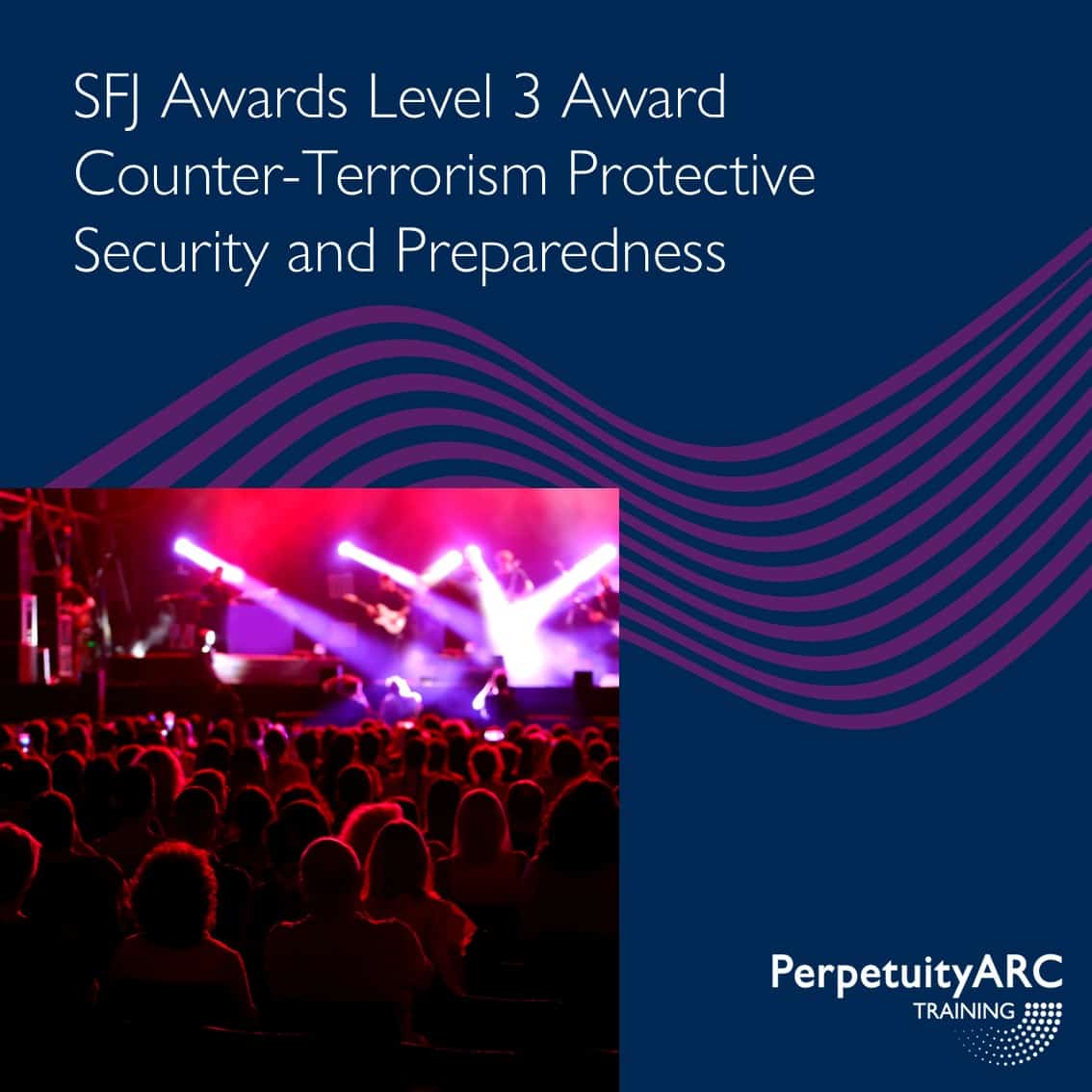
The SFJ Awards Level 3 Award in Counter-Terrorism Protective Security and Preparedness was developed by the National Counter Terrorism Security Office, NaCTSO, and SFJ Awards, and is endorsed by Counter Terrorism Policing.
Whilst the title is a bit of a mouthful, it adequately sums up the aim of the training.
It is broader than a Martyn’s Law compliance course. It helps learners understand terrorist threats, identify vulnerabilities, assess risk and develop practical preparedness plans. Those skills are valuable when preparing for Martyn’s Law and when strengthening security more generally.
Our Belfast delegates included health and safety professionals, security professionals, and premises operators and managers. Between them, they help keep people safe at some of our largest venues, across extensive estates and within some of our most iconic buildings.
Kevin brought a wealth of professional experience to the classroom, built over a career dedicated to keeping people safe. His real-world examples brought the course to life and reinforced the learning.
His knowledge, delivery and willingness to share his experience made an enormous difference. For me, Kevin made the experience.
During the course, we examined threats involving firearms, blades, vehicles, fire and explosive devices, alongside chemical, biological, radiological and nuclear threats.
We also considered how cyber vulnerabilities can undermine protective security and an organisation’s ability to respond.
Different methods, with the potential to cause death, injury, fear and disruption.
None confined to a particular legal tier.
Thinking about your premises from an attacker’s perspective challenges assumptions. It encourages you to examine vulnerabilities you might otherwise overlook and consider proportionate measures to reduce risk.
That was the first piece of the jigsaw in our five-day learning adventure. Forget thinking that terrorists follow rules.
Having examined the threats, we moved on to security culture.
Culture? I thought we needed procedures for evacuation, invacuation, lockdown and communication. Then the box was ticked.
Does culture really matter?
It turns out it matters enormously.
What use is access control if someone routinely props the door open? What use is CCTV if poor system design leaves gaps in coverage? What use is a procedure if the people expected to implement it don’t understand it?
Even the best electronic security systems can be undermined if the culture piece is missing.
Good security culture means people understand why measures exist and use them properly. They notice when something isn’t right, report concerns and feel confident taking action.
As organisations prepare for Martyn’s Law, they need to consider how people, systems and procedures work together. A written procedure alone does not demonstrate that an organisation is ready to respond.
Communication was a running thread throughout the week.
Who needs to know? Who makes the decision? How do you get clear instructions to the people who need them, quickly?
Whether the response involves evacuation, bringing people inside or lockdown, staff need to understand their roles and how instructions will reach them.
Preparing for Martyn’s Law means thinking about how arrangements will work in practice, including how they can be explained, practised and reviewed.
The course challenged us to ask those questions rather than assume that having a document meant the job was done.
One of the most valuable parts of the training was applying a structured framework for terrorism risk assessment and preparedness planning.
Working through a realistic outdoor music festival scenario, we examined vulnerabilities, assessed risks and developed a preparedness plan and counter-terrorism risk recommendations.
We had to think outside the box. Think like a terrorist. Question assumptions that might otherwise leave people exposed.
The framework gives learners a practical way to approach terrorism risk within their own organisations.
That doesn’t mean every premises needs the same measures or the same budget. It means taking a proportionate approach based on your risks, circumstances and resources, rather than assuming an exemption is a safety net.
For organisations preparing for Martyn’s Law in Northern Ireland, this course is particularly relevant to:
Having attended the five days of training, I consider it a must-attend course for those responsible for safety and security who want to strengthen their understanding of terrorism risk.
It provides a rich learning experience and a practical framework for preparing for the terrorist event that may never happen, but might.
Before we departed on day five, weary but empowered, we played, with the permission of Figen Murray OBE, a short video compilation of her son, Martyn Hett.
It featured childhood footage through to clips of his television appearances and him having fun with his friends.
I had a lump in my throat and a tear in my eye.
We must never forget why we are doing what we are doing.
Everyone deserves to come home, whether from a night out, a day at work or a day at school.
Driving home, I felt enormous pride that we had hosted Northern Ireland’s first course of its kind, and that all our delegates, including me, had passed the examination.
Above all, I felt proud to have shared a classroom with people whose job it is to keep others safe. People who understand the weight of that responsibility and sometimes lose sleep over it.
For them, protecting people is a moral obligation as well as a professional responsibility.
And it’s how we all should think.
Terrorists don’t follow flow charts.
Diamond Systems hosts the SFJ Awards Level 3 Award in Counter-Terrorism Protective Security and Preparedness in Belfast, delivered by PerpetuityARC Training.
If you are preparing for Martyn’s Law or want to strengthen your organisation’s approach to terrorism risk and preparedness, email sales@diamondsystems.co.uk to enquire about booking a place on one of our upcoming cohorts.








 Head Office Location