
08-12-2025
Fire safety law in Northern Ireland requires building managers and “responsible persons” to make suitable arrangements for everyone’s safe evacuation. Key legislation includes the Fire and Rescue Services (NI) Order 2006 and the Fire Safety Regulations (NI) 2010, which place a legal duty to plan for all occupants, including those with disabilities or mobility impairments.
Ensuring everyone can exit safely isn’t just good practice – it’s a legal requirement.
Why It Matters
Responsible persons must plan for people with:
Failing to do so could put lives at risk and lead to enforcement action.
Key Elements of a Safe Evacuation
Keeping Plans Effective
Review plans whenever:
Regular training ensures staff are confident and procedures work in practice.
How We Can Help
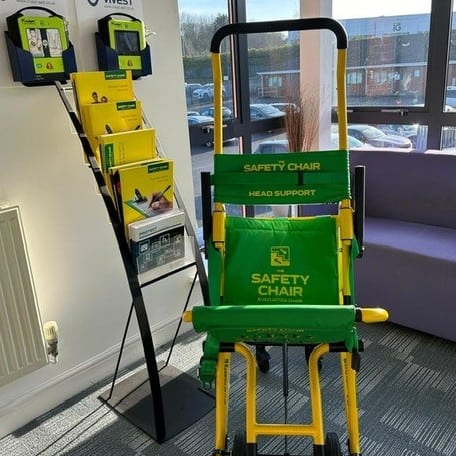
We provide a full service for evacuation safety, including:
Contact our team for more information or a quotation – we’ll help ensure your evacuation plans are safe, compliant, and practical for everyone.








 Head Office Location