Why NI Businesses Are Switching to P50 Fire Extinguishers

Most workplaces still rely on traditional steel fire extinguishers without giving them much thought. While they are effective, they also bring ongoing servicing costs, regular replacements and a significant amount of environmental waste.

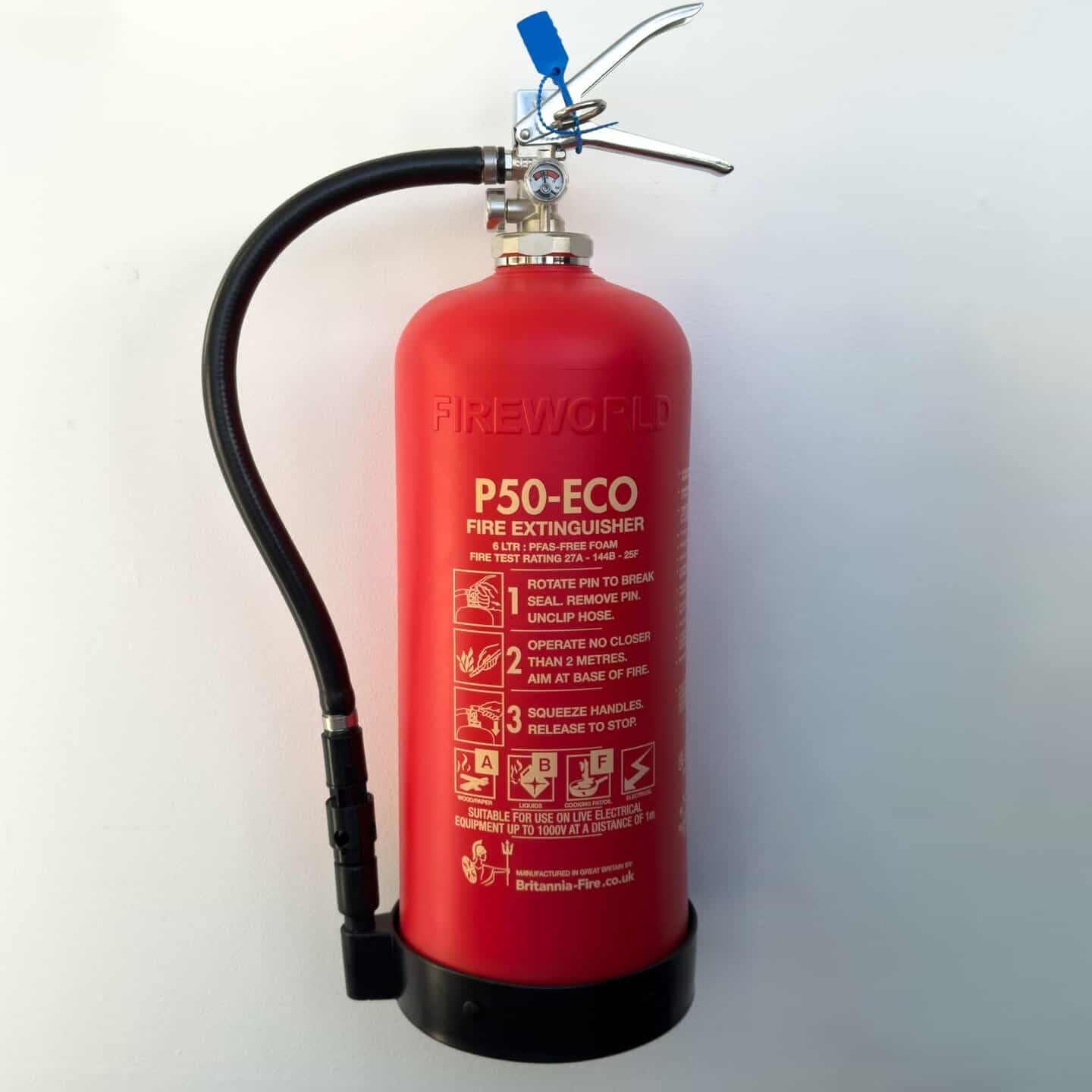
Britannia Fire’s P50 Fire Extinguisher was designed to address these issues directly. It offers a safer, longer-lasting and more cost-effective alternative to standard steel extinguishers. Across Northern Ireland, more businesses are now choosing the P50, and the reasons are clear.

A More Sustainable Fire Extinguisher Option

Unlike traditional steel units, the P50 is manufactured using a composite body. This makes it extremely durable and completely resistant to corrosion.

Steel extinguishers can weaken over time due to rust, dents and general wear, especially in harsher environments. The P50 avoids these problems entirely, helping organisations reduce waste and improve sustainability.

Key sustainability benefits of the P50 fire extinguisher include:

  • A tough composite body that will not corrode or rust
  • A 10-year service-free lifecycle with no annual engineer servicing (inspections can be carried out in-house)
  • A 20-year overall lifespan, with factory refurbishment at year 10
  • PFAS-free foam options, supporting environmental compliance – read more about the latest PFAS regulations and their impact on firefighting equipment in our recent blog here
  • Fewer replacements over time, significantly reducing waste

For organisations focused on ESG goals and environmental responsibility, the P50 is a strong long-term solution.

Lower Lifetime Costs Compared to Steel Extinguishers

While the P50’s environmental benefits are important, it is often the cost savings that first catch the attention of businesses.

With traditional steel fire extinguishers, ongoing costs typically include:

  • Annual servicing by a certified fire extinguisher engineer
  • Replacement parts and maintenance costs
  • A higher number of units due to lower fire ratings
  • Full replacement every few years

The P50 removes most of these expenses. Instead of annual engineer servicing, it requires a simple yearly visual inspection carried out by the responsible person on site.

Thanks to higher fire ratings, fewer extinguishers are often required across a building. In practice, many organisations see lifetime savings of around 40-60% compared to traditional steel extinguishers.

Fully Certified and Compliant in the UK and NI

With its innovative design, the P50 fire extinguisher is fully certified and compliant with recognised UK safety standards.

It meets EN3 requirements and carries BSI Kitemark, UKCA and PED approvals. Each unit is clearly labelled with step-by-step instructions for completing the annual visual inspection and comes with access to the Britannia Fire App.

This ensures businesses remain fully compliant with Northern Ireland fire safety legislation, while reducing ongoing servicing costs.

Ideal for Harsh and Demanding Environments

The P50 performs exceptionally well in environments where steel extinguishers often struggle. Because it does not corrode, it is particularly suitable for:

  • Food production and processing facilities
  • Agricultural and rural environments
  • Coastal locations exposed to salt air
  • Warehouses and logistics centres
  • Manufacturing and industrial sites
  • Cold rooms and outdoor installations

There is no rust, no flaking paint and no gradual weakening of the cylinder over time.

A Smarter Long-Term Fire Safety Investment

The P50 fire extinguisher allows businesses to improve fire protection, reduce environmental impact and cut long-term costs in one simple move.

It is reliable, easy to maintain and built to last significantly longer than traditional steel extinguishers, making it a smart investment in modern fire safety.

Interested in Switching to the P50 Fire Extinguisher?

We supply, commission and support P50 fire extinguishers across Northern Ireland. If you would like a site survey, cost comparison or advice on replacing your existing steel extinguishers, get in touch with our team and we’ll be happy to help.
Fire Warden Training: What It Is & Why Every Workplace Needs It

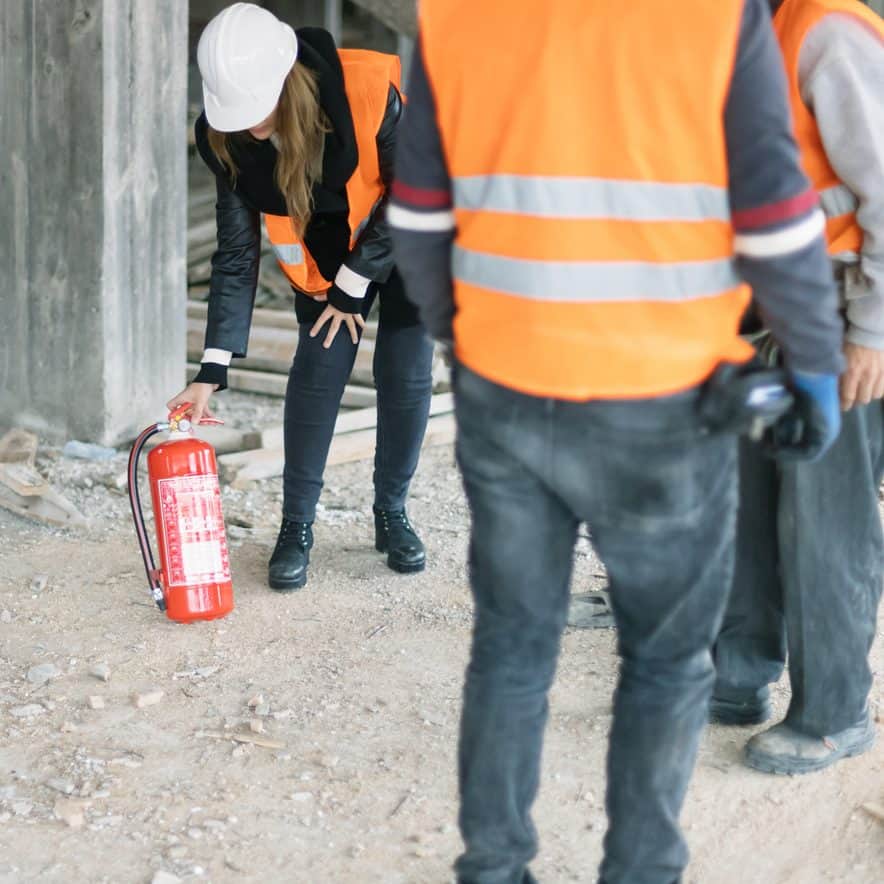
Every workplace has fire risks. Having trained people who know exactly what to do can make all the difference in an emergency. That’s where Fire Warden Training comes in.

A Fire Warden isn’t just there to point at the exit. They play a key role in fire prevention, routine checks, and managing evacuations safely and calmly.

What is Fire Warden Training?
Fire Warden Training gives designated staff the knowledge and confidence to respond effectively to a fire incident. It’s suitable for single-site businesses, multi-site organisations, and teams of all sizes.

What’s covered?
Our Fire Warden course includes:

  • Common causes of workplace fires and how fire spreads
  • Fire classifications and correct extinguisher selection
  • Fire Warden roles and responsibilities
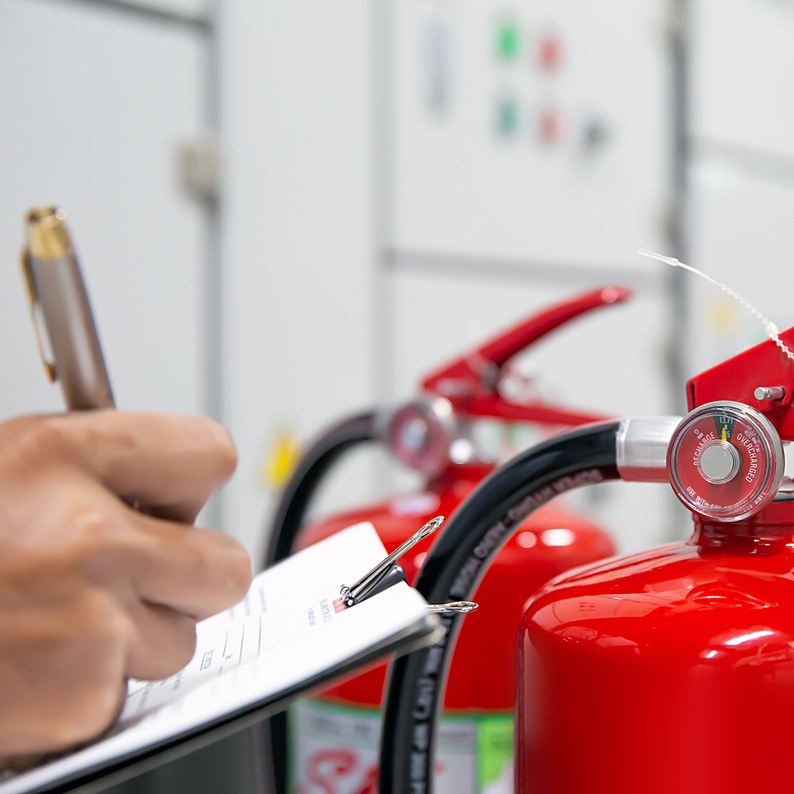
  • Daily and weekly fire safety checks
  • Emergency procedures and evacuations
  • Assisting vulnerable persons
  • Practical fire extinguisher use

Why it matters
Even with alarms and detection systems in place, people are the most important factor in a fire emergency. Trained Fire Wardens help:

  • Reduce risk through regular checks
  • Keep evacuations calm and controlled
  • Ensure staff, visitors, and vulnerable persons get out safely
  • Support your legal duties under NI fire safety legislation

This isn’t a box-ticking exercise. Proper Fire Warden coverage improves real-world safety.

How many Fire Wardens do you need?
It depends on your building size, layout, staff numbers, and shift patterns. As a rule, most workplaces need at least one per floor or department, plus cover for absences.

Fire Warden Training in Northern Ireland
We deliver Fire Warden Training across Northern Ireland, either onsite at your premises or at our training facility. Practical, straightforward, and suitable for all staff levels.

If you’d like further info or a quote for your organisation, get in touch.

PFAS in Firefighting Foams: Northern Ireland Update

PFAS-containing firefighting foams are under increasing scrutiny in Europe due to environmental and health risks. Unlike the rest of the UK, Northern Ireland follows EU chemical rules under the Windsor Framework, meaning NI businesses must comply with the latest EU PFAS restrictions. New guidance has just been released by the Fire Industry Association, the largest fire safety trade association in the UK.

Northern Ireland Follows EU PFAS Rules

Under EU REACH and POPs legislation, the use of PFHxA and related PFAS chemicals in firefighting foams is being restricted. For Northern Ireland, the key points include:

  • Training and Testing: From 10 April 2026, C6 foams used for training and testing are restricted above defined PFHxA limits (i.e., ≥25 ppb for PFHxA (and salts) or ≥1,000 ppb for the sum of PFHxA-related substances), except where releases are fully contained and safely disposed of.
  • Public Fire & Rescue Services: Similar restrictions apply from the same date, except COMAH (Seveso III) sites.
  • Civil Aviation: C6 foams for airports and aviation use will face restrictions from 10 October 2029.

The restriction limits the amount of PFAS in firefighting foams as follows:

PFAS shall not be placed on the market or used as of 23 October 2030 in firefighting foams in a concentration equal to or greater than 1 mg/L for the sum of all PFAS.

Specific portable extinguisher extended use derogations cover:

New (extinguishers placed on market for the first time):

  • AFFF/FFFP fire extinguishers: phased out by 23 October 2026
  • Alcohol-resistant foam variants: phased out by 23 October 2027

Existing extinguisher stocks (already in service):

  • All foam fire extinguishers – 30 December 2030

PFAS Management Requirements

From 23 October 2026, any use of PFAS-containing foams must follow strict management guidelines:

  • Only use on Class B (flammable liquid) fires
  • Minimise environmental emissions and human exposure
  • Implement a PFAS-containing foam management plan with annual reviews
  • Maintain records for at least 15 years
  • Label all stocks of unused foam and waste appropriately
  • Ensure separate collection and safe disposal of unused foam, PFAS waste, discharged foam, firewater run-off and wastewater (including from system cleaning).

These measures ensure compliance while helping reduce environmental impact and health risks.

What This Means for Northern Ireland Businesses

For companies and facilities in Northern Ireland:

  • Compliance is mandatory – PFAS rules from the EU apply directly to NI
  • Phased deadlines give time to replace existing foam safely
  • Planning for PFAS-free alternatives now is wise to future-proof fire safety strategies
  • Staying proactive reduces regulatory risk and aligns with sustainability goals

How Diamond Systems Can Help

At Diamond Systems, we support Northern Ireland businesses in transitioning away from PFAS-containing foams and ensuring fire safety compliance. Our team can:

  • Audit current firefighting foams
  • Recommend PFAS-free alternatives such as the P50 Eco-Foam from Britannia Fire 
  • Provide guidance on phased replacement and regulatory compliance

Thinking about updating your fire safety equipment or reviewing compliance? Get in touch with our team today for expert advice and a site survey.

Download the full FIA Guidance Note here.