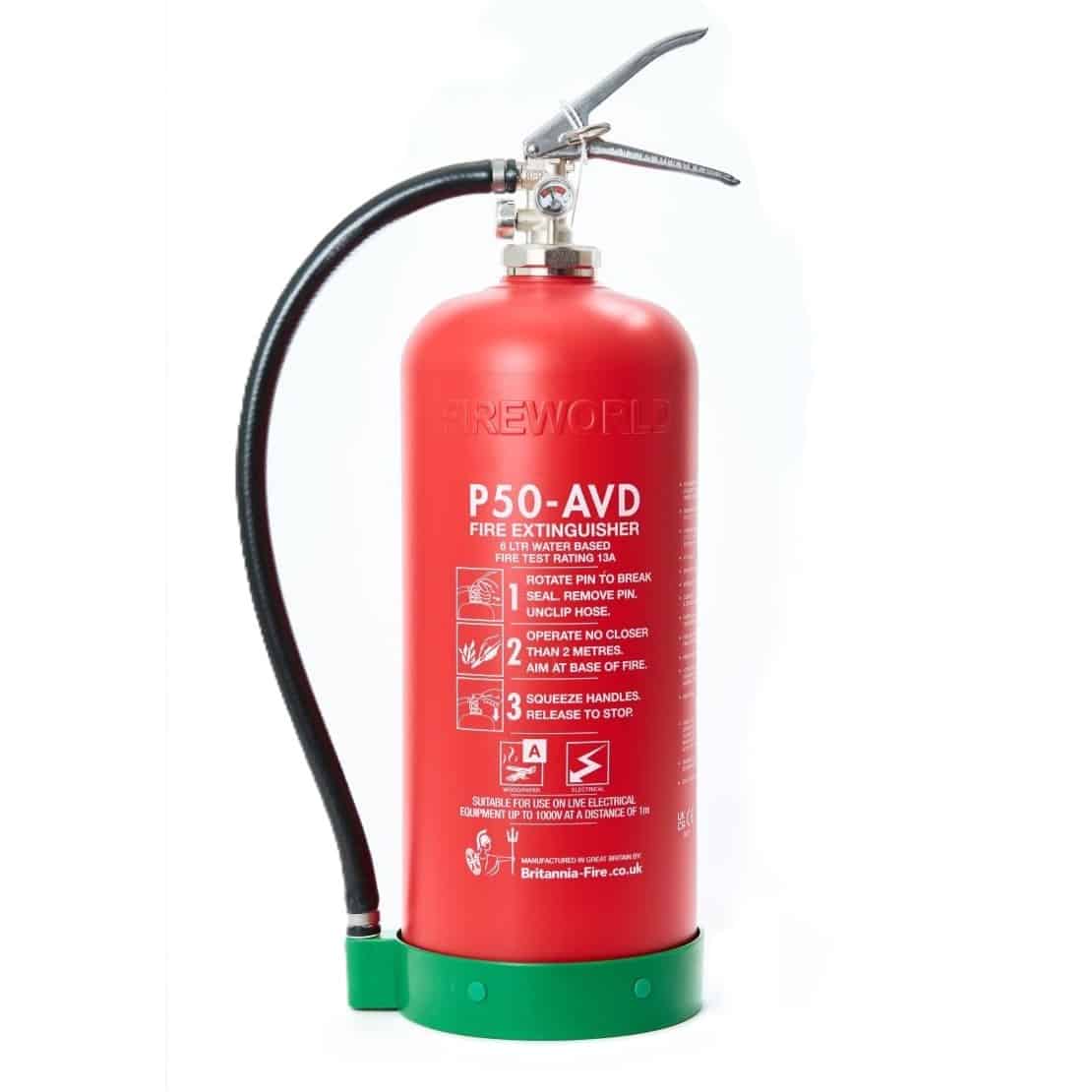
P50-AVD Extinguisher: Protect Against Lithium-Ion Battery Fires

Lithium-ion batteries power everything from smartphones and e-scooters to industrial energy storage systems. While they’ve transformed modern life, they also present a unique fire risk. Traditional extinguishers often struggle with these fires – which is where the P50-AVD extinguisher comes in.

Advanced AVD Technology for Lithium-Ion Fires

The P50-AVD uses Aqueous Vermiculite Dispersion (AVD), a certified extinguishing agent designed specifically for lithium-ion battery fires. It also works on Class A fires, including wood, paper, and textiles, and is safe for use on live electrical equipment up to 1000V. With an operational temperature range of +5°C to +60°C, it’s built to handle real-world conditions.

Key Benefits

  • Designed for lithium-ion battery fires
  • 20-year corrosion guarantee
  • 10-year manufacturing warranty
  • Lightweight and easy to operate
  • No annual engineer service required
  • Durable aramid fibre construction
  • Recyclable and long-lasting

Simple In-House Maintenance

Maintaining the P50-AVD is straightforward – no specialist engineer needed:

  • Check the indicator (red = return to supplier).
  • Ensure the tamper seal is intact.
  • Wipe off dust and inspect the base.
  • Test both gauges with the magnet.
  • Confirm operational lifespan via colour-coded stud.
  • Record inspection in the logbook.

This approach saves time and cost while keeping the extinguisher fully operational.

Ideal for High-Risk Environments

The P50-AVD extinguisher is perfect for:

  • Battery charging facilities and e-scooter hubs
  • Tech and electronics workshops
  • Warehouses with energy storage systems
  • Industrial sites using battery-powered machinery

Its lightweight, corrosion-resistant design ensures it’s easy to deploy wherever fire risk is highest.

A Smart Investment in Fire Safety

The P50-AVD provides:

  • Effective suppression of lithium-ion and Class A fires
  • Safe use on live electrical equipment
  • Sustainable and recyclable materials
  • Cost-effective, low-maintenance operation

For businesses prioritising modern fire safety, efficiency, and environmental responsibility, the P50-AVD is a clear choice.

Get Your P50-AVD Extinguisher in Northern Ireland

As Britannia Fire’s local distributor, we supply, commission, and support P50-AVD extinguishers across Northern Ireland. Contact our team today for a site survey, cost comparison, or advice on replacing existing extinguishers.


ICC Belfast to Host The Responsibility to Protect Conference in March 2026

On Wednesday 25 March 2026, industry leaders, regulators and safety specialists will gather at ICC Belfast for The Responsibility to Protect: Life Safety, Security & Compliance in 2026.

Convened and sponsored by Diamond Systems, and delivered in partnership with ICC Belfast, the half-day conference will focus on the practical implementation of Martyn’s Law and the wider responsibilities facing organisations responsible for publicly accessible spaces.

The event is co-sponsored by Uptick and Fire Aware, reflecting a collaborative, industry-wide commitment to raising standards in life safety, security and compliance.


Turning Legislation into Practical Action

With the introduction of Martyn’s Law, organisations across the UK are facing new and heightened duties around security, preparedness and public protection.

The Responsibility to Protect is designed to cut through complexity and provide clarity:

  • What your responsibilities are
  • What the law expects
  • How to implement proportionate and effective measures
  • How competence, accreditation and technology support safer outcomes

The conference will move beyond theory and focus on practical, operational delivery.


Keynote Address from Figen Murray OBE

The keynote address will be delivered by Figen Murray OBE, whose campaign following the Manchester Arena attack led directly to the introduction of Martyn’s Law.

Her contribution will provide important context around the intent of the legislation and the responsibility carried by those managing publicly accessible environments.


Contributions from Regulators, Emergency Services and Industry Leaders

The programme brings together a powerful line-up of speakers including:

  • The Security Industry Authority
  • PSNI
  • Fire Industry Association
  • National Security Inspectorate
  • Axis Communications
  • Ambient Systems
  • The Emergency Group
  • Nimbus
  • Britannia Fire
  • Uptick
  • Fire Aware

Sessions will explore:

  • Martyn’s Law implementation
  • The role of regulators and enforcement
  • JESIP and emergency response coordination
  • Safe evacuation for all
  • Voice alarm and communication systems
  • Sustainable fire protection solutions
  • Real-time compliance visibility
  • CCTV and analytics
  • Competence, accreditation and elevating standards

The conference will conclude with a panel discussion focused on raising standards and strengthening professional accountability across the sector.


Who Should Attend?

The event is aimed at those carrying legal, moral and professional responsibility for public safety, including:

  • Facilities managers
  • Premises owners
  • Venue operators
  • Estates teams
  • Health & Safety professionals
  • Education campuses
  • Local authorities
  • Transport hubs
  • Healthcare providers
  • Hospitality and retail operators

A Shared Commitment to Safer Public Spaces

Speaking ahead of the conference, Rob McConnell, Chief Executive of ICC Belfast, said:

“Public safety is a shared responsibility, and venues like ICC Belfast have a vital role to play in leading best practice.

This conference brings together the people shaping policy, technology and standards to ensure our public spaces are safer, more inclusive and better prepared for the future.”

Angela Bennett, CEO of Diamond Systems, added:

“Martyn’s Law represents a significant step forward in how we approach safety in publicly accessible environments. This conference is about turning legislation into practical action, while also looking ahead to how innovation, competence and sustainability support better safety outcomes.

By bringing together policy leaders, safety professionals and technology experts, we aim to support those with responsibility for public spaces to understand their obligations, share best practice and implement proportionate, robust safety measures.”


Event Details

The Responsibility to Protect
25 March 2026
ICC Belfast
8.30am – 1.30pm (registration from 8.30am)

Tickets are available via Eventbrite, with early booking recommended.

Martyn’s Law: What Schools, Colleges & Universities Need to Know

Martyn’s Law – officially the Terrorism (Protection of Premises) Act 2025 – is coming, and it will fundamentally change how educational institutions approach safety and security. With full implementation expected by April 2027, schools, colleges, and universities need to act now to understand their responsibilities and prepare effectively.

Martyn’s Law isn’t just about physical security – it’s about planning, preparation, and protecting lives.

Who in Education Will Be Affected?

Martyn’s Law applies to any educational setting where people gather, but the rules differ depending on the type of institution:

Early Years, Primary Schools, Secondary Schools & Further Education Colleges

  • Schools accomodating more than 200 people fall under a “standard tier” of duties, even if large assemblies or events bring many people together.
  • The emphasis is on proportionate planning and preparedness, not heavy-duty infrastructure.
  • Schools should focus on:
    • Lockdown, invacuation and evacuation procedures
    • Emergency communication plans
    • Staff training for crisis response
  • Even smaller schools who fall outside the scope (less than 200 people) benefit from documenting basic procedures.

Higher Education Premises

  • Higher Education premises may fall under standard or enhanced tier, depending on campus size and student numbers.
  • Enhanced tier requirements apply to premises where 800 or more people may reasonably be expected to be present, and may include:
    • Formalised risk assessments tailored to each site
    • Appointment of a Designated Senior Individual to oversee compliance
    • Detailed documented emergency and security plans
    • Potential for additional security measures like CCTV, controlled access points, or monitoring, depending on risk

Key Requirements Under Martyn’s Law

Martyn’s Law focuses on practical, risk-based measures to protect people, rather than turning educational institutions into fortresses. Key requirements include:

  • Risk Assessment
    Understand the specific threats to your site and the potential impact.
  • Emergency Preparedness Plans
    Document procedures for lockdowns, evacuations, and invacuation.
  • Staff Training and Awareness
    Ensure staff know their roles during a crisis and can act quickly.
  • Proportionate Security Measures
    Implement safeguards that match the scale and risk level of your institution.

Start now – documenting and practising these procedures today can save time and stress later.

Why Acting Now Matters

Martyn’s Law isn’t just another policy, it will be a legal obligation. Waiting until the law comes into force could leave schools and universities scrambling to comply, potentially putting staff, students, and visitors at risk.

By preparing in advance, institutions can:

  • Reduce vulnerabilities
  • Strengthen emergency response
  • Ensure compliance and avoid penalties
  • Demonstrate commitment to staff, students, and parents

You can find further information on how Martyn’s Law will affect education settings here.

Learn More at Our Conference

To help you get ahead, we’re hosting a conference dedicated to Martyn’s Law, life safety, and compliance:

The Responsibility to Protect: Life Safety, Security & Compliance in 2026

🗓 25th March 2026
🎟️ Reserve your place now

What you’ll gain:

  • Insights into Martyn’s Law and how it could affect your organisation
  • Practical guidance to help comply with legal duties
  • Real-world examples and expert advice on safety, security, and compliance