
Employee Q&A – Connor White

Name: Connor White

Position: Apprentice Engineer

How long have you been in your role?

I am studying City and Guilds Level 2 Certificate in Knowledge of Electronic Security and Emergency Systems under the Apprenticeships NI scheme, in Belfast Metropolitan College. I started this course in September 2018, and from then I have been going to work at Diamond systems 3 days of the week and to the college 2 days.

Describe a typical day?

During my 3 days per week at work I feel as if the information that you gather while on the job is second to none.  It gives you a feeling of independence going out to work and learning new skills every day. The college is very much the same as we do theory one day and practical the next. This helps me acquire skills that I can take with me to my place of work, for example in tech we have learnt how to install a full intruder alarm panel, and then add all the devices to it, so this gives us a introductory experience of installation.

 How would you describe the culture within Diamond?

Since I started working at Diamond I can say that everyone has welcomed me with open arms.  Everyone in the company is keen on helping me learn and expand my skills for the future.

 What do you like most about your role? 

When I am at work and am out with an engineer, we have set jobs to complete during the day. These jobs can vary between CCTV, Intruder, Fire and Access Control and this is what I really like about the job – you are never stuck doing just one thing, and there are always opportunities to learn something new.


Is it time to upgrade your Fire Detection and Alarm System?

Fire detection and alarm systems, like any form of technology, don’t last forever.  When your fire alarm system exceeds ten years old, it may be time to consider upgrading.

Why Ten Years?

The lifetime of the optical parts inside a smoke detector is defined as the time expected for it to drop to below 70% of its initial light output. Although it will still operate, the detector will cease to operate within its designed specification.

Other electronic components are known to slowly change specification over time. This can affect the sensitivity of the smoke sensor over a long period of time. An increase in sensitivity might cause false alarms. Decreased sensitivity could significantly affect the time required to detect a fire and impact the time available for evacuation or other fire response measures.

All devices should be replaced in accordance with applicable legislation in the country where they are installed. If not required to be replaced earlier, we recommend that any devices over ten years old should be replaced as part of your buildings’ standard maintenance and upgrade processes.

The Upgrade Process

The process is less daunting than you might think, and partnering with a specialist such as Diamond will ensure a smooth transition to a modern fire detection and alarm system.

Older fire alarm systems often no longer meet current safety requirements. Nuisance alarms may occur more often as the system ages, resulting in downtime and an interruption to business processes. In certain sectors, including hospitality, false alarms have an impact on the reputation of your brand, and may even result in a financial loss. Additionally, older systems require increasingly intensive maintenance, and it could be more economical to consider an upgrade to newer technology rather than putting more money into an old system. All these aspects affect your safety needs, and those of the occupants within your premises, which is why a fire alarm system requires timely modernisation.

Diamond Systems, in partnership with the world’s leading fire detection and alarm manufacturers, will guide you through the upgrade process and offer you a range of brands, depending on your budget and exact requirements. You may not need a complete system replacement, as some of our brands will utilise the existing cabling within the premises, saving you money on the overall upgrade.

Phased Modernisation to New Technology

You can also choose to upgrade you fire alarm system in stages, by way of a phased modernisation. A phased approach offers the advantage of bringing modernisation in line with your requirements and budget.  Upgrading to the latest technology ensures that your fire safety is kept up to date.

In conjunction with Siemens Financial, Diamond Systems are pleased to offer leasing options over 3 or 5 years, to help spread the cost of upgrading. You may also wish to include a fully comprehensive contract in the leasing package, helping you to accurately forecast expenditure over time.

Features of Modern Fire Detection & Alarm Systems

Diamond offer a range of intelligent Fire Detection and Alarm Systems, with most modern fire alarms now offering the following features:

  • Longer life cycle: 20- 25 years compared to the traditional 10 year life cycle
  • Smart detection – fast, reliable detection with immunity to deceptive phenomena e.g. steam, dust, aerosols
  • Remote access – for both the user and the maintenance specialist
  • Degrade mode – communication of an alarm even in the event of a processor failure
  • Radio fire detection – useful for temporary installations or historic buildings
  • Easy and intuitive to operate
  • True Open Protocol systems
  • Cloud connectivity – providing greater visibility on multiple buildings from any location. The resulting higher responsiveness increases safety and enhances operational efficiency

To discuss the life safety requirements for your business, or to arrange a demonstration of the latest fire detection and alarm systems on the market, contact us on 02890 207 207, or email sales@diamondsystems.co.uk.

Diamond are a ‘cut above’ in being shortlisted for top International Awards

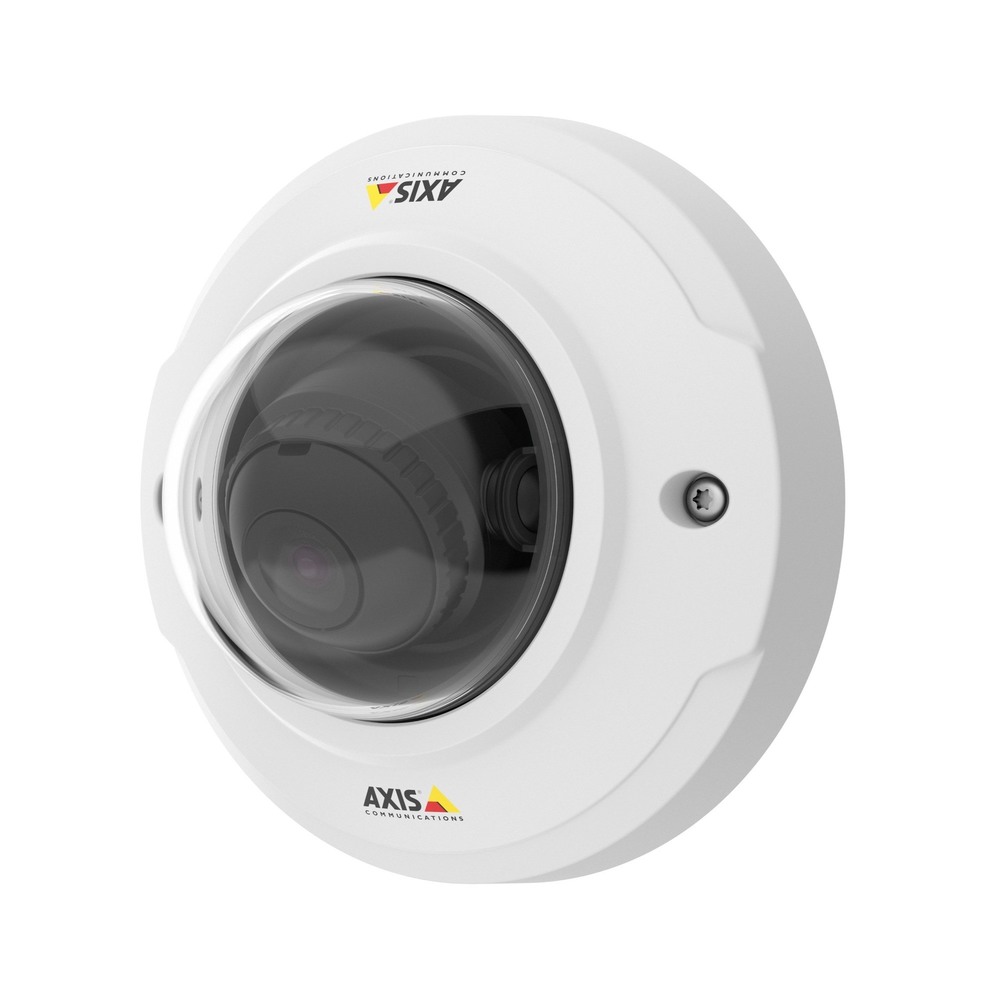
Our £500,000 state-of-the-art CCTV system installed at the Odyssey complex – one of the most innovative in Europe – has earned us international recognition at the Security and Fire Excellence Awards held in London on 21st November 2018.

The system was shortlisted based on the innovation utilised to meet the precise client’s operational requirements, in challenging light conditions. The solution utilises Axis Lightfinder technology and boasts an innovative speed dry function to shake off water residue from outdoor security camera lenses. The use of Zipstream technology, which compresses video footage, significantly reduced the cost of data storage at the venue.

Whilst losing out on the award on the night, the team thoroughly enjoyed the event and for all those companies shortlisted, the awards provided a platform for innovative companies to demonstrate their capability and professionalism on a global stage.

Peter Dempsey, Key Account Manager at Axis Communications, commented:

“As the leading entertainment venue of its kind in Northern Ireland, the Odyssey’s security requirements are continuously evolving. Our commitment to really understand the business, and partnering with organisations such as Diamond, ensured we could deliver a solution that was tailored to its needs.”

Brian Hughes, Group Head of Facilities at The Odyssey Complex, adds:

“Through the use of intelligent applications such as Lightfinder and Zipstream, we can be confident we have the technology to support our unique security needs. Working closely with Diamond and Axis, we were also keen to ensure the system has capacity to include analytics in the future. This could include customer footfall and queue management, bringing benefits in terms of operational effectiveness, guest satisfaction and of course, visitor safety.”

Employee Q&A – Kyle Adams

Name: Kyle Adams

Position: Project Engineer

How long have you been in your role?
I joined Diamond in 2008 when I left school, on the Apprenticeships NI Programme. During my 3 year training contract I attended Belfast Met for part of the week and completed NVQ Levels 2 & 3 in Security Alarms.

Describe a typical day?
A typical day consists of being out on the road, usually with an apprentice who assists me, carrying out routine and reactive maintenance, or installation, commissioning and handovers of fire alarm, intruder alarm and CCTV systems. I was recently promoted to Project Engineer, so the jobs I am working on are the more complex contracts undertaken by the company.

How would you describe the culture within Diamond?
I would say Diamond is a very friendly place to work and all of our work is completed to a very high standard. For me, joining over ten years ago as a school leaver, it has been a great place to learn about the main principles of the job, and there is good teamwork throughout the whole company.

What do you like most about your role?
I like the variety of my job. I like the fact that usually I am not working in the same place for 8 hours every day, and that the next day I am more than likely going to be carrying out different tasks than what I was doing the day before.

Diamond partner with Dunmurry Golf Club to launch Business Ladies Networking Group

Dunmurry Golf Club hosted a launch event today for a new business networking group created by Diamond Joint Managing Director, Angela Bennett. The group is open to female business owners and senior executives who have an interest in learning to play golf. Dunmurry Golf Club will host the group lessons between January and March 2019, rounding off the programme with a fun three-hole competition on 5 April.

“I always had an interest in learning to play but never quite got around to it”, said Angela. “Whilst visiting our longstanding customer, Dunmurry Golf Club, earlier this year, I decided to put together this group and I am delighted with the level of interest we have had.”

In January 2019, twenty women from a range of business sectors will begin the Ladies into Golf programme.

“As well as the fun of learning golf as part of a group, we all have an interest in business networking, and it will be a very enjoyable experience getting to know each other on our golf journey.”

Employee Q&A – Zara Philpott

Name: Zara Philpott

Position: Office Administrator

How long have you been in your role?
I joined Diamond in the summer of 2018, but have been doing administrative duties for around 10 years.

Describe a typical day?
Everyday will vary, so it goes in a flash – one minute it’s 8.30am the next its 5.00pm! It can get very busy in the office especially at peak times. A typical day would consist of operating the switchboard, answering incoming emails to the service desk, logging calls on our integrated service management system, and dispatching the engineers to any fault calls that need attended to within our 4-hour response window.

How would you describe the culture within Diamond?
The culture with Diamond is really great. Everyone knows one another and we all get on well together. Overall Diamond is a great place to work and we hold our core company values close. We each remind ourselves daily what is expected of us as employees, and do our utmost to contribute to the team’s success.

What do you like most about your role?
What I like best about my job is interacting with both customers and employees on a daily basis. We know our customers very well at Diamond and it is nice to have developed a rapport with them over the last few months. No two days are the same and each day is exciting and challenging. I like my job because the team care about me as a person and my professional growth within the company. If I have an issue everyone is always willing to help me.

How can I eliminate False Fire Alarms?

Advanced Signal Analysis, or “ASA” Technology in a nutshell eliminates false fire alarms.

In this blog post we have a look at how this is achieved and what benefits this unique technology offers to a variety of application areas.

ASA detectors form part of the range of products within the Siemens Cerberus Pro fire detection and alarm system offered by Diamond Systems.

Why choose ASA?

Traditional detectors are unable to distinguish between smoke and other deceptive phenomena including:

  • Steam
  • Aerosols
  • Exhaust fumes
  • Cooking fumes
  • Cigarette smoke
  • Dust
  • Insets
  • Dry ice
  • Burnt toast

Consequently, these detectors are often the cause of many false fire alarms, which are an inconvenience to building occupants, a cost to the business owner, and an unnecessary drain on the resources of the fire and rescue service.

To minimise false fire alarms, detectors are usually isolated during for example theatrical performances involving dry ice, or in areas where cooking is currently taking place. Alternatively, heat detectors are installed in problematic areas, but these do not provide early indications of fire and therefore pose a big risk, perhaps an unacceptable one for many.

Thanks to innovation from global leader Siemens Building Technologies, there is now a more effective, robust solution to this problem, and it is called ASA technology.

How does the Technology Work?

ASA technology works by converting the recorded signals within the detector’s sensor into mathematical components. These components are then compared with the programmed values in real time using intelligent algorithms.  The intelligence of nine selectable parameter sets makes the detectors immune to deceptive phenomena, which in turn prevents unnecessary downtimes and costs caused by false alarms.  The selected parameter set dynamically adapts itself to the current situation. That means in case of a real fire, the ASA detector reacts more sensitively – and in case of deceptive phenomena, it is more robust.

Typical Application Areas

Detectors with ASA technology are the best choice for protecting especially demanding application areas, where you need highly advanced technology to ensure maximum safety and optimal protection – with no false alarms. Typical application areas include:

  • Data Centres
  • Industrial Production Facilities
  • Hospitals and Nursing Homes
  • Restaurants, bakeries and canteen kitchens
  • Garages and car parks
  • IT and telecommunications equipment
  • Entertainment venues utilising dry ice


Can my existing Fire Alarm system incorporate ASA technology?

Diamond Systems have successfully migrated numerous existing fire alarm systems to Siemens Cerberus Pro ASA Technology, with no downtime. Why not contact us to discuss your requirements.


Intelligent Procurement of CCTV Systems

As a Procurement Manager, Designer or System Specifier, you will be faced with a wide array of options nowadays when selecting an IP based CCTV system. And let’s face it, no one wants to be the one to make the bad decision that ends up costing you or your client more in the long run! That’s why it is so important to make, or recommend, an informed purchase, one which takes account of the complete life-cycle of the system, enabling you to make an intelligent procurement decision.

If you don’t, you may find that your upfront cost will prove to be the tip of the iceberg in terms of the total cost of ownership!

With an influx of low cost IP CCTV brands from outside of the EU over the past few years, the temptation is there to purchase or specify a system which on the face of it appears to be at a “good price”. But have you considered the Total Cost of Ownership before you make that procurement decision? Will the system deliver reliability and usability, and how much will it cost to run?

As a leading provider of innovative and sustainable fire and security solutions, Diamond Systems are equipped with both the expertise and experience to help guide you through your selection of IP CCTV. Joint Managing Director of Diamond Systems, Steve Snoddon, explains that making a more intelligent choice when it comes to surveillance systems makes financial sense: “Our partnership with the world’s leading innovator of video surveillance systems, Axis Communications, means we can now offer a unique technology, called Zipstream, which drastically reduces bandwidth, processing, and storage requirements by an average of 50%, without compromising on image quality. With today’s surveillance systems capturing more and more images, in greater detail and better quality than ever before, storage is now a major consideration and can contribute to up to 25% of the initial investment cost.”

Lowering storage requirements means lower upfront costs, but the Axis range also delivers savings in respect of ongoing operating costs. Diamond Systems, a Gold Axis Communications Partner, advocates a thorough review of ongoing costs before making an IP CCTV procurement decision. A study by Axis Communications estimates that 49% of the life cycle cost of a surveillance system comprises maintenance and operation costs. The Axis product range offered by Diamond Systems has been designed to minimise ongoing operating costs through performance and reliability, and has undergone rigorous testing by Axis in order to offer a solution which truly delivers a lower total cost of ownership.

By selecting the Axis product range from Diamond Systems, featuring Zipstream technology and lower operating costs, you can rest assured you are making a more intelligent procurement decision. You can find out more about Diamond Systems’ range of innovative and sustainable CCTV systems by contacting us to arrange a demonstration of Axis Communications’ Zipstream technology.

Eliminating False Fire Alarms

False alarms are generally an unwelcome occurrence, causing disruption to business, a drain on government resources, and a tangible cost to all parties involved: the company, the public and  the fire and rescue service. Another major concern is loss of production due to evacuation, risk of fines/prosecution and loss of confidence in the alarm equipment.

Over 7,000 false alarm calls are recorded annually throughout Northern Ireland due to fire alarm equipment. Given that the cost of each dispatch is approx £3,000, a large amount of money is being spent on something that could have otherwise been avoided.

Why do false alarms due to equipment happen?

There are 2 main issues:

  • a lack of regular maintenance;
  • or failure to update older technologies.

The Solution is Simple

In partnership with global manufacturer Siemens, we can offer a simple solution to false alarms with the Cerberus Pro intelligent product range and are leading the way in trying to eradicate this widespread problem in Northern Ireland.

“With the introduction of fines in some regions of Great Britain for false activations, Diamond’s direct access to the Siemens range of products and support, means cost effective solutions for our customers that meet requirements and enhance system performance,” explains Steve Snoddon, Joint Managing Director of Diamond.

The Cerberus Pro product range has been specifically designed with the purpose of reducing false alarms. The range includes a variety of control panels, fire detectors, peripheral devices and accessories designed to offer excellent reliability and protection against false alarms.

“Diamond, in partnership with Siemens, have a solution to reducing false fire alarms. This is a major step forward in reducing the financial burden of false fire activations on the local economy,” says Steve.

Cerberus® PRO is a powerful fire protection system for fast, reliable fire detection, alarm signalling and control. Its wide portfolio of innovative products provides clever technology with extensive safety features. So you can be sure to meet your application with confidence. Main features:

  • Smart, unique safety features such as built-in turbo isolators, degrade mode, standby functionality, etc.
  • Cerberus PRO fire control panels combine high security standards with the latest technology
  • Fire detectors also increase safety thanks to their distributed intelligence: important decisions are made on the spot in the detector
  • Degrade mode functionality is integrated throughout the system: ensuring detection, control, alarming and fire brigade communication even in the event of a processor failure

Contact us to arrange a demonstration of the technology.

Are you aware of the changes to BS7273-4?

business hand pushing compliance button on blurred background

BS7273-4 is the Code of Practice for the operation of fire protection measures – Part 4: Actuation of Release Mechanisms for Doors. Essentially this code of practice provides recommendations for the interfacing of fire door mechanisms with the fire detection and alarm system, to ensure that in the event of a fire:

  • Automatic fire doors close to prevent the spread of smoke and fire
  • Automatic doors fail ‘open’ so as not to trap occupants or inhibit their escape
  • Access controlled doors, gates and turnstiles fail ‘open’ so as not to trap occupants or inhibit their escape.

The standard was revised in 2015 and BS7273-4:2015 has replaced BS7273-4:2007, which has been withdrawn. With effect from 1 October 2015 systems must, where applicable, be designed to comply with the recommendations of this revised standard.

BS5839-1, the Code of practice for design, installation, commissioning and maintenance of fire alarm systems in non-domestic premises, calls up BS7273-4, and therefore compliance with BS7273-4 is a requirement when interfacing electronically held open fire doors, electronically secured doors (typically access controlled), and power sliding doors to a fire alarm system to ensure compliance with BS5839-1. Clause 9.2(a) of BS5839-1:2013 specifically states:

“The system should conform to the recommendations of any applicable part of BS7273”.

Why was the Standard Revised?

Previously, a device local to the doors effectively switched the doors to fail safe mode and released electrically secured fire exits and closed fire doors held open on magnetic door retainers. However, this is not always the case and a truly fail safe mode is not achieved. Therefore in some circumstances fire doors fail to satisfy enforcers that recommendations of BS 7273-4 are being met. BS 7273-4:2015 will help to clarify the expectations of users and match it to the technology available to the fire safety industry.

Anthony Burd, Head of the Construction Sector at BSI commented on the change: “Until the development of BS 7273-4 in 2007, there was no code of practice with recommendations governing the interface of fire doors and the fire detection /fire alarm system, although there was guidance for the devices themselves.” He continued: “Imagine not having the security of knowing that a fire was contained because the doors had not gone into fail safe mode. Crucially, this revision gives fire safety enforcers the criteria for fail safe operation, and the standard goes even further by defining three different categories of actuation – ‘Critical, ‘Standard, and ‘Indirect’, each of which has a set of criteria for fail safe operation under defined conditions.”

What are the key changes?

The key changes to BS 7273-4 are:

  • The diagrams relating to the location of smoke detectors in relation to electrically held-open fire doors have been revised. This is intended to make the recommendations clearer and to remove possible confusion where a single diagram has been used to convey several principles applying to detector siting and spacing
  • There have been changes in terminology to assist users of the standard. The designations, A, B and C for categories of actuation are now referred to as ‘Critical’, ‘Standard’ and ‘Indirect’
  • The guidance in BS 7273-4:2007, Annex A of the previous standard is now normative and, therefore, the standard includes recommendations (in tables in Annex B of this version) as to which category of actuation is appropriate for a particular application

What do the changes mean for System Designers?

Designers need to be aware of these changes to facilitate compliant design of systems where there is an intention to interface devices covered by BS7273-4:2015. The system design proposal, or specification, must state the category of actuation it is proposed to install.

The scope of buildings requiring Critical Actuation (Category A) compliance is extensive and includes premises occupied by, or open to, the general public including:

  • Shops and shopping centres
  • Hotels
  • Boarding houses
  • Public houses
  • Cinemas
  • Theatres
  • Museums
  • Galleries
  • Leisure centres
  • Transportation terminals
  • Residential care homes
  • Hospitals
  • Schools, Universities and other educational facilities.

When specifying and selecting equipment it is therefore essential that System Designers ensure that all equipment is third party certificated to BS EN 54, as well as being able to meet the recommendations for operation and fault monitoring contained within BS7273-4:2015.

As a Siemens Cerberus PRO partner, Diamond Systems offer a fire alarm solution which fully complies with all parts of BS7273-4. Diamond Systems Cerberus PRO input/output device is certified to EN 54 part 18, and provides a cost effective, smart solution for those installations that require Critical Actuation (Category A) interfacing to door release mechanisms. If your fire alarm design or installation requires interfacing to door release mechanisms, and you are seeking a cost effective, fully certified, compliant solution contact the experienced team at Diamond Systems on 02890 207 207, or info@www.diamondsystems.co.uk for further information on our Cerberus PRO fire product range.

Diamond Systems offer CPD training on the BS7273-4:2015 code of practice, which can be held at your office for your convenience or alternatively at Diamond HQ in Belfast. Contact us to enquire about CPD training.